9 Cheap Home Updates That Make a Big Impact
I’ve spent years adding character to our builder grade home, and some of the cheapest home updates I’ve made have had the biggest impact, often bigger than a full renovation, new appliances, or major home improvements. Fresh paint, lighting, hardware, wallpaper, and thoughtfully chosen artwork can completely change how an entire room feels. Even new area rugs.
These are the simple home projects I return to again and again, both in my own home and when designing spaces for clients. This isn’t about chasing trends. It’s about making a cookie cutter house feel collected, personal, and full of visual appeal, and it’s good news for budget-conscious homeowners who want real results without a construction budget.
What Cheap Hardware Update Makes the Biggest Difference?

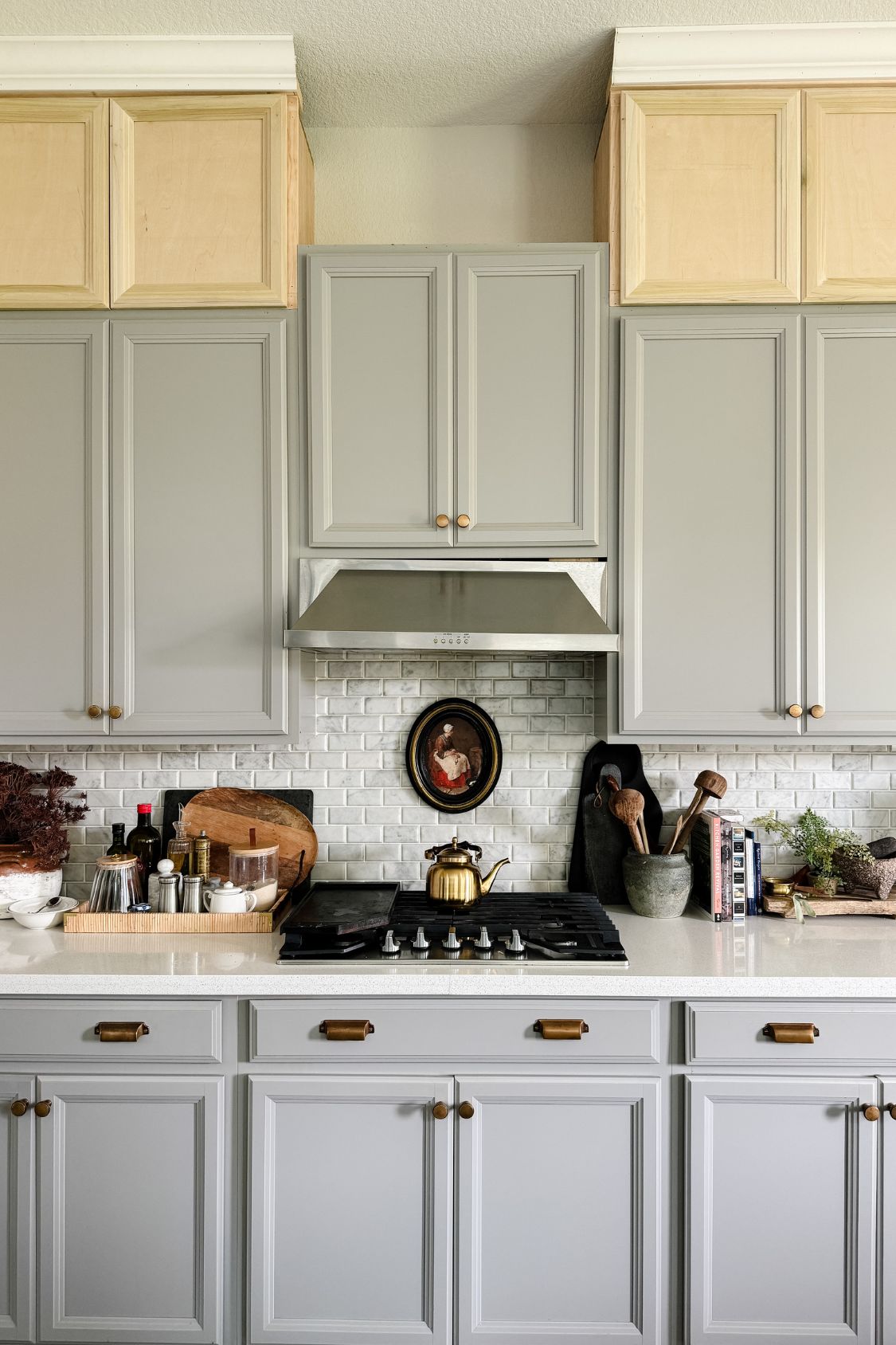
Swapping out builder grade hardware for warm, intentional finishes makes one of the biggest differences for the least amount of money, in a kitchen or anywhere else in the house.
In my own kitchen, I used warm brass details alongside matte black appliances. The finishes don’t match perfectly, but the good thing is repeating the brass throughout the space makes everything feel intentional and gives the room a more modern aesthetic without a full kitchen renovation. It’s one of the same tricks I used when I extended our builder grade cabinets to the ceiling, where new hardware did just as much visual work as the cabinet extension itself and also serves as one of the most affordable home upgrades.
I use knobs on cabinet doors and pulls on drawers because that combination feels more considered, and hardware is especially useful when the cabinets themselves are still in good shape. Cabinet hardware really is the jewelry of a room, and it’s one of the first things I look at when a kitchen or bathroom feels builder grade. Kitchen renovations can really be that easy!
I have an in-depth guide on how to choose hardware for your cabinets. Give it a read here.

How Does Paint Transform an Entire Room?

Paint transforms an entire room fastest when you use it to highlight architectural details instead of just changing the wall color.
One of my favorite examples is our playroom, where I used Majolica Green on the trim and Green Onyx on the doors, both in a satin finish. Painting those details made the room feel completely custom before I added any furniture or decor. This works just as well in a living room or dining room as it does in a playroom.
I’ve also used paint to create faux limewash and faux wallpaper effects, so don’t feel limited to simply rolling one color onto four walls. It’s also worth remembering that bigger surfaces like hardwood flooring are a much larger investment, so I usually tackle paint long before I ever touch the floors.
Can a Pantry Door Really Change the Whole Kitchen?

A pantry door can change the feel of an entire kitchen, even though it takes up very little visual space.
My pantry is only a small corner space, but I didn’t want it to feel like an afterthought. Antique doors instantly gave the entrance more character and set the tone for details like vertical tongue and groove walls, shallow shelving, and cafe curtains. This project is still in progress in my own home, but the door was the first piece that made the space feel worth finishing.
Does Painted Wallpaper Really Make a Big Impact?

Painted wallpaper makes a big impact because it gives a room personality long before you can afford a full renovation.
My guest bathroom started with gray tile and boring beige walls, and the first thing I did was hand paint a wallpaper pattern using a laser level and a few paintbrushes, a project I pulled off with tools I already had in my basic DIY toolkit. That painted pattern instantly became the room’s feature wall. That one project gave the room character months before the bigger renovation began.
I later added white penny tile with a slate blue liner, hand glazed wall tile, a new vanity, updated lighting, and fresh caulk around every edge, but the painted wallpaper is where the transformation actually started.
Do Throw Pillows Actually Make a Room Feel Cohesive?

Throw pillows make a room feel cohesive when they pull colors from patterns that already exist in the space, not when they perfectly match.
In our playroom, I layered wallpaper, a vintage Turkish rug, hunter green pinch pleat curtains, and porcelain print upholstery. Pillow covers are one of the easiest ways to tie those colors and patterns together, whether it’s a playroom, a living room, or a bedroom.
I usually look for one or two colors that already exist in the room rather than buying a matching pillow set, and it’s a genuinely low price way to add a touch of elegance without redoing the whole room.
How Do You Create Affordable Artwork That Looks Expensive?

You create affordable artwork that looks expensive by mixing thrifted frames with quality prints instead of buying a matching art set.
On our staircase, I paired Ajrak wallpaper from my Chasing Paper collection with a small gallery wall, which turned a blank, awkward wall into a real focal point and something collected and custom. I love mixing thrifted frames with newer black and gold ones, and printing artwork I love from artists like Tessa Brown Art and Mel Remmers Art through Mpix, using the Giclee print option for better quality.
A beautiful frame, proper sizing, and a good print can make inexpensive art look far more elevated. For heavier frames or hanging a full grid, a laser level and claw style picture hangers make the whole project easier.
Can a Plate Wall Really Work as Wall Art?

A plate wall works as wall art because it fills an awkward space for very little money and can be collected slowly over time.
Plates are one of my favorite forms of unexpected wall art. I always keep plate hangers on hand because a small collection of thrifted or vintage plates, picked up for a genuinely low price at garage sales and antique shops, can fill an awkward wall without much investment.
I especially love arranging them around a mirror because the combination reads as one larger focal point, which is what I did in my own dining room. I’ll also often place them somewhere unusual, like between windows or under a shelf, instead of the expected spot.
Do New Light Fixtures Make a Big Impact for the Money?

New light fixtures make one of the biggest impacts for the money because they reinforce a room’s personality instead of just providing light.
My guest bathroom makeover included updated lighting as one of the changes that made it feel less builder grade. I also used a statement Mitzi fixture in our playroom to reinforce its collected, vintage inspired look.
Poor lighting can make even a beautifully designed room fall flat, and I frequently see fixtures that are too small for the room they’re in, or rooms that lean too heavily on natural light during the day and have nothing warm to offer at night. Lighting should feel like part of the design, not something added as an afterthought.
Can You Add Layered Lighting Without an Electrician?

You can add layered lighting without an electrician by using cordless wall sconces and picture lights instead of running new wiring.
I love using rechargeable wall sconces because they add another layer of lighting without opening up a wall, and I look for options with a long battery life so they’re actually practical to use.
Cordless sconces and picture lights are especially effective around artwork, bookshelves, and other spots where you want a custom look without permanent wiring, and picture lights in particular can make inexpensive art feel far more intentional.
How Can I Decorate My Front Door?

Painting your front door is the one exterior update that belongs on this list, since it’s often the cheapest way to boost curb appeal and change a potential buyer’s first impression before they even step inside.
I’d treat it the same way I treat an interior feature wall, one bold, well chosen color rather than something safe. Zillow’s research on front door colors found that homes with black front doors received meaningfully higher offers than similar homes without them, while colors like pale pink and cement gray actually worked against sellers.
A can of paint and an afternoon is a small investment for that kind of visual impact. If you’re working on the rest of the exterior at the same time, outdoor lighting and a few budget-friendly backyard updates round it out nicely.
How Do You Decide Which Home Update to Do First?

Start with whatever is making the entire room feel builder grade, not with several small decorative items that won’t meaningfully change how it looks.
Sometimes that’s the beige wall color. Sometimes it’s an undersized light fixture, basic hardware, or a completely blank wall. From there, paint usually comes first if the room feels flat or disconnected, followed by lighting if it feels dated, hardware if the cabinets or vanity are good but generic, and wallpaper or a feature wall if the room lacks character.
Artwork, plates, pillows, and cordless lighting are the final layer once the bigger pieces are in place, and bigger ticket items like hardwood flooring or a full kitchen renovation can wait until after these smaller wins are done.
It’s also worth knowing this approach holds up at resale, not just for daily life. Interior repainting alone can return more than 100% of its cost in added home value, and a fresh, cohesive palette tends to make a stronger first impression on potential buyers than an expensive kitchen renovation that only updates one room.
Frequently Asked Questions
What is the cheapest way to update a home?
Paint is usually one of the least expensive ways to change an entire room. Hardware, throw pillows, thrifted artwork, and cordless lighting can also make a noticeable difference without requiring a renovation.
What home upgrades make the biggest visual impact?
Paint, lighting, cabinet hardware, doors, and large scale artwork tend to make the biggest impact because they affect prominent or repeated elements throughout a room, whether it’s a kitchen, a living room, or a hallway.
How can I make my home look more expensive on a budget?
Focus on scale, layered lighting, cohesive colors, substantial hardware, and properly framed artwork rather than simply filling the room with more decor.
Should all the hardware and lighting finishes match?
No. Mixed metals can make a home feel more collected, but the finishes should repeat somewhere else in the room so the combination feels intentional rather than random.
Looking back at the projects in my own home, the rooms with the most character weren’t necessarily the ones where I spent the most money. They were the rooms where I paid attention to the details.
A hand painted wall, an antique pantry door, a thrifted frame, or a better light fixture can completely change how a space feels. The goal isn’t to add more decor. It’s to make a few intentional choices that give your home a story.
This post contains affiliate links to products that I used or recommend. If you purchase something through an affiliate link, I may receive a small percentage of the sale at no extra cost to you. I really appreciate your support!