How My South Asian Heritage Shapes the Way I Design

South Asian heritage design is something I never set out to build. It found its way into my work slowly, and honestly, it started with rejection rather than love.
I didn’t always love traditional design. Growing up in Karachi, ornate carvings, decorative wall paneling, and grand architectural details often felt tied to the British Raj. Rejecting those influences felt like a form of rebellion. I was so much more drawn to the clean lines and simplicity of modern design instead.
I didn’t have the language for any of this at the time. I just knew that traditional design felt like something from a past we were trying to move beyond. It took me years of personal experience to separate the beauty of these crafts from the history I’d tangled them up with, and to realize how deeply South Asian cultures and my own cultural roots had shaped me the entire time, whether I wanted them to or not.
What Is South Asian Heritage Design?
If you ask me now, South Asian heritage design isn’t one fixed look you copy and paste into a room. It’s more of a lens. You take the textiles, the colors, the materials, and the architectural details of South Asian cultures, and you let them show up as layers in a home instead of a theme stamped across it.


For me, that’s meant a modern layout, honestly the same kind of Bauhaus-style home I grew up in, layered with carved walnut furniture, teak doors, marble flooring, and pieces made by local artisans.
Our childhood home had white walls and a very modern built environment on the outside. Underneath all that simplicity, it was still unmistakably a South Asian home, and it shaped my sense of modern aesthetics from day one, long before I knew that’s what was happening or that any of it counted as design at all.
How Does South Asian Culture Influence Interior Design?
Honestly, most of it comes through the textiles, the craftsmanship, the warm color palettes, and a handful of simplified architectural details, way more than through any single fixed style tied to one region or one south asian community.

Some of my earliest design lessons didn’t happen anywhere near a showroom. They happened shopping with my mother in the markets, picking out a fabric, hunting down the right trim, looking through embroidery, building an outfit piece by piece. Looking back, we were basically putting together mood boards before I even knew what a mood board was.
That everyday life experience, learning to layer pattern, texture, and color almost by instinct, still shapes how I design rooms today. It was the first time design stopped living only in showrooms or magazines for me. It lived in ordinary moments too, and I think that early exposure is part of why I still design around personal experience rather than trends.
What Is Ajrak and How Is It Used in Home Decor?

Ajrak is a traditional block-printed textile from the Sindh region of Pakistan, and its roots stretch across South Asian and Indian heritage into neighboring Gujarat and Rajasthan too. In a home, it usually shows up as a throw, an accent piece, or wall art, not as yardage you’d upholster a whole sofa in.
It’s genuinely one of my favorite textiles to work with. Throw one over the back of a sofa or fold it over an armchair and it instantly brings warmth, color, and a little piece of home into the room. A sozni embroidered blanket on a bed does something similar, becoming the focal point in an otherwise simple room and giving that space a story a mass-produced throw could never tell.
These are real works of art, made by hand, and that’s a big part of why they carry so much weight in a room even when there’s just one of them sitting quietly against a blank wall.
How Do You Incorporate South Asian Textiles Into a Modern Home?

I treat them as accent pieces layered into an otherwise simple space, never as the thing the whole room gets redesigned around.
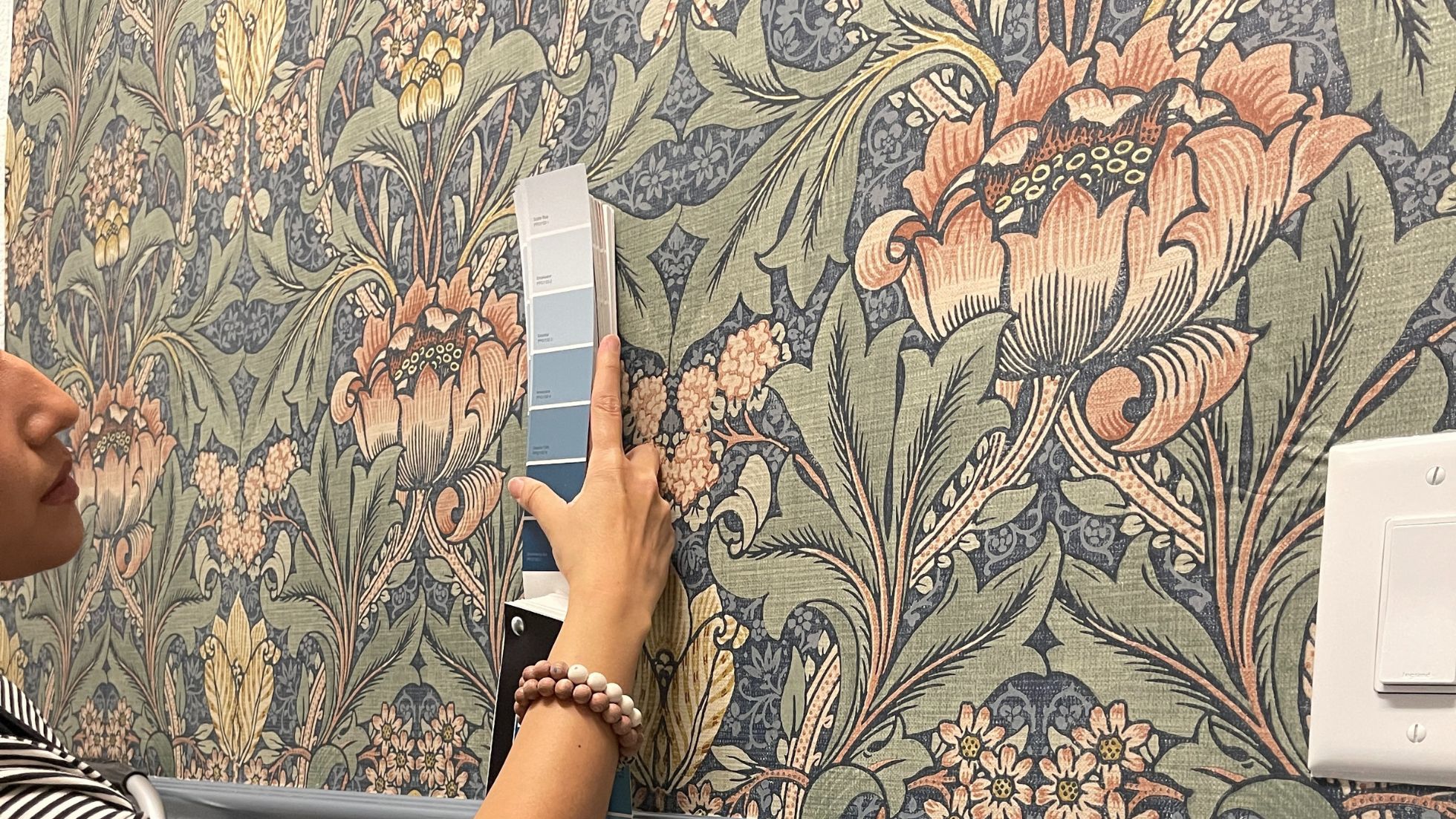
Block prints show up in my work constantly, sometimes as an entire wallpapered room, sometimes as one pillow or a single lampshade. I brought a lot of this straight into my own wallpaper collection, where prints like Ajrak sit right next to softer florals rooted in folk art traditions.
A single textile, placed with intention, almost always reads as more elevated than filling a room with pattern all at once. It’s a small way of connecting a very local craft to a much more global culture of design, without losing what made the piece special in the first place.
What Are Common South Asian Architectural Design Elements?

Arches, pierced screens called jali, geometric patterns, and simplified decorative touches like a carved toe kick, those are the ones I come back to most.
Even something small, the curve of an arch or the shape of a cabinet detail, can remind me of Mughal architecture, especially the jali screens and pierced arches that were historically used to filter light and air through a room. It doesn’t need to be literal or heavily ornate to carry that influence.
I usually simplify these forms so they sit comfortably in a modern home instead of feeling like a museum piece. Materials do a lot of this work too. Cane and wicker will always remind me of Karachi, and paired with warm wood, marble, and aged brass, they bring real depth into a space without saying a word about where they came from.
What Colors Are Used in South Asian Interior Design?

Warm, earthy tones, mostly. Terracotta, rust, deep reds, mustard, saffron, earthy pink, warm green, indigo.
I don’t pick color based on what’s trending that month. I’m drawn to colors that feel familiar, the shades of the markets, the textiles, and the city where I grew up. Even in a neutral room, I lean on warm undertones, wood, pattern, and texture so it never ends up feeling like just another stretch of blank walls waiting for something to happen. It’s a quiet way of keeping a space feeling grounded, even before a single piece of furniture goes in.
How Do You Add Cultural Heritage to a Room Without It Feeling Themed?

You let one or two meaningful pieces carry the weight of it, instead of filling the whole room with the same idea over and over.
I never want a room to feel themed. I want these influences to feel natural, layered, and personal, like they actually belong to the people living there. In practice, that usually means mixing inherited or handmade pieces with modern furniture, letting one traditional textile act as the focal point, and repeating a color subtly throughout the room rather than matching everything to it.
It’s less about representing an entire south asian background in one space, and more about representing the specific people who actually live in it and their own personal experience of home.

My design style isn’t fully traditional, and it isn’t fully modern either. It sits somewhere in between, honestly, the same place I sit. Shaped by Karachi, by my South Asian heritage, by the home I grew up in, and by the life I’ve built since.
The design elements I once pushed away are often the ones I feel most connected to now. There’s real beauty in the carving, the block prints, the embroidery, the arches, the materials that surrounded me growing up. Bringing them into my work was never about recreating the past. It’s about carrying a piece of it forward, into interior design that still feels like everyday life, and letting it become something new.
Frequently Asked Questions

How does South Asian heritage influence interior design?
It often shows up through textiles like block prints and embroidery, warm earthy color palettes, natural materials like cane and marble, and simplified architectural details inspired by Mughal design, like arches and geometric patterns.
What is Ajrak and how is it used in home decor?
Ajrak is a traditional block printed textile from the Sindh region. In home design, it’s often draped over furniture, framed as textile art, or turned into pillows to bring pattern and color into a room.
Do you have to fully commit to a themed room to include heritage in your design?
No. A single meaningful textile, a repeated color, or one architectural detail can bring heritage into a space without making the whole room feel like a theme.
This post contains affiliate links to products that I used or recommend. If you purchase something through an affiliate link, I may receive a small percentage of the sale at no extra cost to you. I really appreciate your support!