How to Install Picture Frame Wall Molding (Step-by-Step Guide)

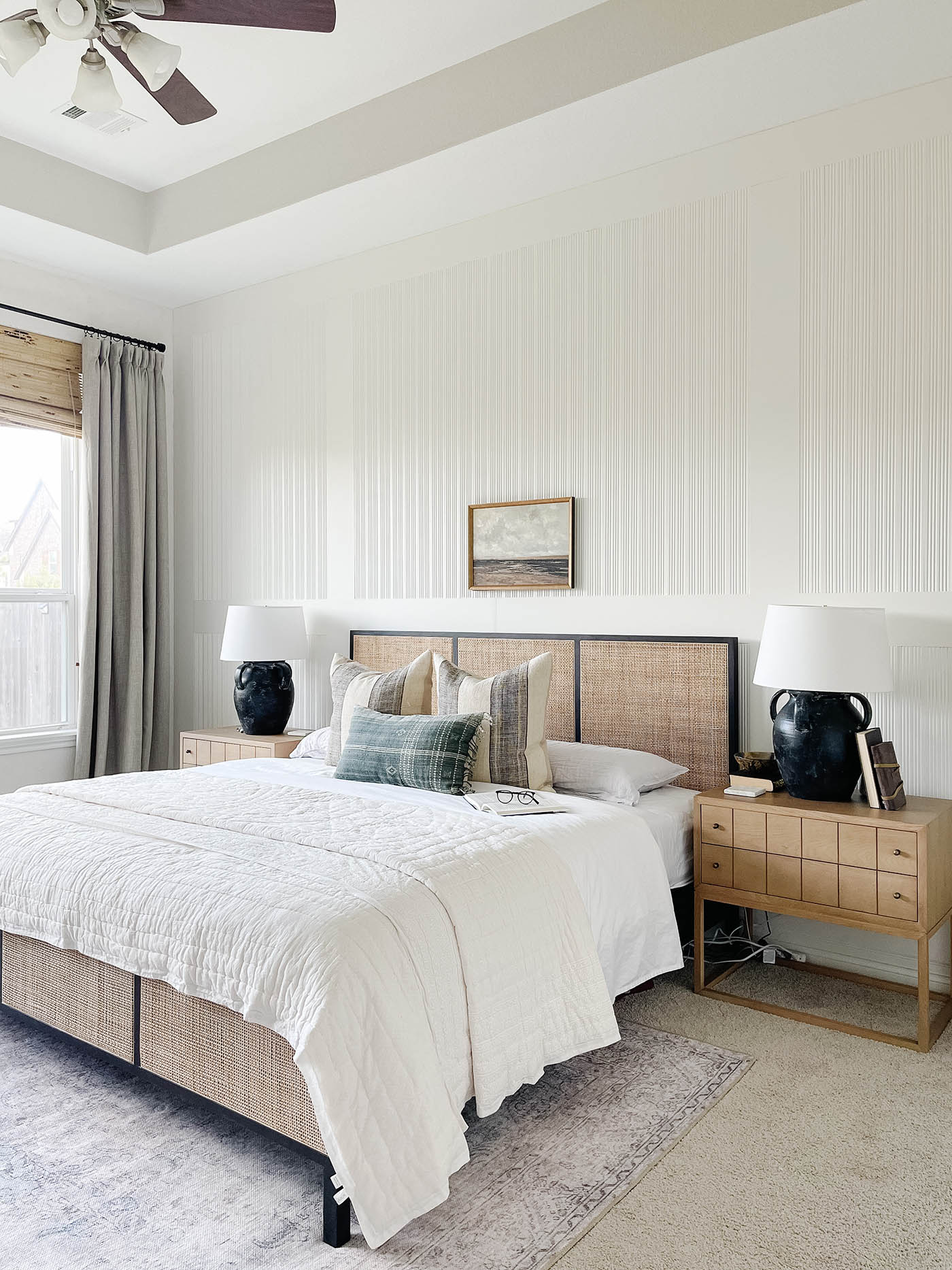
If you have been thinking about how to install picture frame molding, consider this your sign to finally go for it. I love using molding and trim work to turn plain, builder-grade walls into something that feels custom and full of character.
Picture frame molding is such a fun and surprisingly approachable DIY project, and it works in pretty much any space. You can add it to the dining room, living room, home office, or even the laundry room if you are feeling fancy.
Grab your tape measure, a good playlist, and maybe a coffee (or two), and let’s make those walls look amazing.
How to Install Picture Frame Molding
Adding picture frame molding to your home is a fantastic way to elevate its aesthetic appeal. This DIY project not only adds a touch of elegance but also creates visual interest on plain walls.
Whether you’re looking to spruce up your dining room, living room, home office, or even a laundry room, this guide will walk you through the process.
I’m a huge proponent of taking basic, builder-grade spaces and turning them into custom homes that reflect your design style.
One way to achieve a custom designer home look is by adding millwork. Think crown molding, traditional chair rails, or, in this case, picture frame molding boxes.
There are so many different ways you can incorporate moulding and millwork into your home, and picture frame wall molding is one of the easiest ones to DIY, especially if you are new to power tools.
In fact, this is one of the few types of decorative molding that can be done WITHOUT power cutting tools like a miter saw. Y
ou can cut at a 45-degree angle with a simple tool called a miter box and a hand saw.
Let’s get started!
Before diving into the installation, gather all necessary tools and materials:
Tools and Materials Needed
- Picture Frame Molding
- Tape Measure
- Long Level or Laser Level
- Pencil
- Power Miter Saw or Hand Miter Box
- Finish Nail Gun or Brad Nail Gun
- Construction Adhesive
- Nail Set
- White Wood Filler
- Sandpaper
- Caulk and Caulking Gun
- Paint and Primer
- Drop Cloth

How to Install Picture Frame Molding in 6 Easy Steps

Step 1: Plan Your Design
The first thing you need is a solid design plan.
Measure the walls where you’ll be installing the picture frame molding. Decide on the number of boxes, their sizes, and the spacing between them.
Remember to account for wall studs when planning your layout. While you don’t need to nail picture frame molding to wall studs, it’s always good to locate them before a project in case you need to hang something heavy, like a wall sconce, or find wiring.
Decide whether you want to add trim work to the entire wall or the entire room. It’s always a good idea to draw your design on paper before buying materials. This helps calculate how much trim molding you need to buy.
Another tip is to leave at least 3-4″ from the baseboard molding to install your picture frame trim. Same with the bottom of the crown molding, leave at least 3-4″ above the top of the box.
Step 2: Mark the Wall

Use a tape measure and a pencil to mark the layout on the wall. Draw faint lines to indicate where each piece of molding will go.
To help visualize the design I recommend using painters tape to mark out the boxes – sort of a wall map for the boxes.
If you have boxes that are more than 8′ long, I suggest getting 12-foot lengths of trim so you don’t have to make too many joints.
Step 3: Cut the Molding

Cutting the molding accurately is crucial for a professional look. This is probably the part that makes most people nervous, but I promise you, once you get the hang of making a 45-degree cut, this will be easy peasy.
If the type of moulding you’re using is thin enough, you can use a miter box to make the cuts, straight lines, or angles.
You can use a hand saw to cut each trim piece. The faster way is to use a power miter saw, which is my preferred method.
Grab your measuring tape, measure the length of each piece, and make your angled cuts. I would cut each box at a time because measurements can vary, and it gives you fewer chances of making mistakes if you cut pieces one by one!
If you’re new to this, watching a YouTube channel tutorial on making these cuts can be a game-changer.
For long walls, if you need to make a straight joint between moulding pieces, consider making a scarf joint for more professional results. This is an angled cut, which makes for a seamless joint.
Step 4: Install the Molding

Use your laser level or long level to make sure you nail all the trim pieces in a straight line.
Start with the bottom trim piece of the box molding. Apply a bead of construction adhesive to the back of the molding and press it onto the wall.
Use a finish nail gun to secure it, placing nails, ideally, into the wall studs for a firm hold. I used my brad nailer because I didn’t have a finish nail gun at hand, but that is the right tool to use.
The nails it uses are much smaller, and it makes a much smaller hole in the trim installation. Cordless nail guns are much more convenient to use than those that need an air compressor.
Next, install the vertical pieces. Then move on to the top piece. Ensure each piece fits snugly and aligns with your design plan. Continue installing the pieces on the rest of the wall.
Step 5: Fill Nail Holes and Gaps

Once all the molding pieces are installed, use wood filler to fill any nail holes and corner gaps. Smooth out the filler with sandpaper once it’s dry.
Apply a thin bead of caulk along the edges of the molding to fill any remaining gaps. This step ensures a flawless finish.
Step 6: Paint the Molding

After filling and sanding, it’s time to paint. Prime the molding first, then apply your chosen paint color. You could create an accent wall by painting the molding on the wall a different color.
I personally like covering the entire room’s walls with moulding and painting them all the same color for a more classic look.
Tips and Tricks for a Professional Finish

Use a Laser Level and Tape Measure
I cannot stress enough how important it is to use a laser level and a good old tape measure when planning your picture frame wall molding.
I used my laser level to make sure every line was a straight line and all my picture frame boxes were perfectly aligned from the top of the baseboard to the crown molding. The tape measure was basically glued to my hand the entire time. It is the best way to make sure your design plan actually looks good on the entire wall before you even touch a nail gun.
Start With a Solid Design Plan
Before I touched any trim piece, I had a clear design plan. I mapped out the number of boxes, decided on the spacing, and made sure I left enough space from the bottom of the wall and the crown molding.
It’s always a good rule of thumb to leave at least 3 to 4 inches above the baseboard and below the crown molding. Drawing it all out with pencil marks or even painter’s tape helped me visualize it in the entire room.
Master Those Corner Cuts
If you are nervous about corner cuts, I get it. I used a miter box and hand saw on some vertical pieces when I wanted to take my time and double-check my angles. A miter box is the easiest way to cut a 45-degree angle without needing big power tools like a miter saw.
For longer trim pieces, I did use my miter saw because it is faster and, honestly, kind of fun.
Choose the Right Tools and Materials
Having the right tools is key to a smooth trim installation. I used a brad nailer when my finish nail gun was acting up, and it still did the job beautifully. Construction adhesive helps hold each piece of molding in place before you secure it with nails.
Always use wood filler for nail holes and corner seams, then finish with a caulk gun to smooth the edges before painting. Trust me, this makes all the difference for that classic look.
Don’t Forget the Details
I always make sure to fill all nail holes with wood filler and sand everything down for that seamless, timeless look.
When I painted, I used a high-quality paint color that matched my design style and covered the entire process carefully. If you have wide open spaces or tall ceilings, consider double-panel molding or even upper boxes to add extra visual interest.
Adding picture frame moulding is a great way to bring in those elegant design elements without taking up much space.
Think About Future Decor
One of my biggest concerns when planning was making sure I could still add sconces, wall mirrors, or artwork later on. Remember to plan around electrical and think about where you might want to add decorative accents down the line. The golden rule is to keep your design flexible enough for future updates.
Adding traditional picture frame molding or modern picture frame molding boxes is such an easy way to completely transform a room, whether it’s your dining room, living room, home office, or even a laundry room. From corner shelves to sectionals and TV stands, this type of trim work plays so nicely with all types of home decor.
Installing picture frame wall molding is a fun project that can transform any room in your home, from the dining room to the home office.
With the right tools and a bit of patience, you can achieve a classic look that adds value to your home along with visual interest.
Don’t forget to use a drop cloth to protect your floors and be meticulous with each step of the process for the best look!
How to Install Picture Frame Molding FAQs

Can I install picture frame molding on textured walls?
Yes, I’ve added picture frame moulding to my media room walls without covering the texture. It’s not very noticeable. For other walls in my home, I’ve covered texture by using a thin 1/8″ backerboard and even floating the wall with joint compound. It’s a personal preference mostly, and also depends on how much time you have on hand.
What type of paint should I use for molding?
Use a high-quality, satin interior paint for durability and easy cleaning. I would even go for a semi-gloss sheen to add some interest.
Can I use a hand saw instead of a power miter saw?
Yes, a hand miter box and saw can work, but it may take more time and effort.
How far apart should picture frame molding be?
The distance between each molding box is totally up to you, I’ve done as little as 3” and up to 8”. Planning it out on the wall will give you a better idea of what distance looks good. Check out my double raised panel moulding tutorial and how to do a board and batten wall.


How to Install Picture Frame Molding
Learn how to install picture frame molding the easy way that looks designer!
Ingredients
Method
- Start by carefully planning your design. Measure the height and width of the wall, then decide how many picture frame boxes you want, along with their size and spacing. A good rule of thumb is to leave at least 3–4 inches of space above the baseboard and below crown molding to keep the proportions balanced. Sketch the layout on paper or use painter’s tape directly on the wall to map out the design before cutting any molding.
- Once you have your design, use a tape measure and pencil to lightly mark the outlines of each molding box on the wall. For a clearer visualization, apply painter’s tape over your pencil lines to create a mock-up of the boxes. This helps you double-check spacing and proportions before committing. If your boxes are longer than 8 feet, purchase 12-foot lengths of molding so you can avoid unnecessary seams.
- Measure and cut each piece of molding one box at a time to ensure accuracy. Use a miter saw or a miter box with a hand saw to make precise 45-degree angle cuts for the corners. If you’re working with extra-long walls, consider cutting scarf joints instead of straight cuts to create a seamless, professional-looking connection between pieces. Cutting carefully at this stage ensures the final installation looks polished.
- Apply a thin bead of construction adhesive to the back of each molding piece, then press it firmly onto the wall. Start with the bottom piece of the box, followed by the vertical sides, and finish with the top. Use a brad nailer or finish nail gun to secure the molding in place, ideally nailing into wall studs when possible. Always check with a laser level or long level as you go to make sure each piece stays perfectly straight.
- After all the molding is installed, fill nail holes and corner gaps with wood filler. Once the filler dries, sand it smooth so the surface looks even. Next, run a thin bead of paintable caulk along the inside and outside edges of the molding to seal any gaps between the trim and the wall. This step makes a huge difference in giving the molding a clean, professional finish.
- Finish by priming and painting your new molding. For a timeless, cohesive look, paint the molding and wall in the same color. If you want something more dramatic, consider painting the boxes or wall in a contrasting shade. High-quality interior paint in a satin or semi-gloss sheen works best for trim because it’s durable and easy to clean. Step back and admire your freshly installed picture frame molding that instantly elevates the room.
This post contains affiliate links to products that I used or recommend. If you purchase something through an affiliate link, I may receive a small percentage of the sale at no extra cost to you. I really appreciate your support!